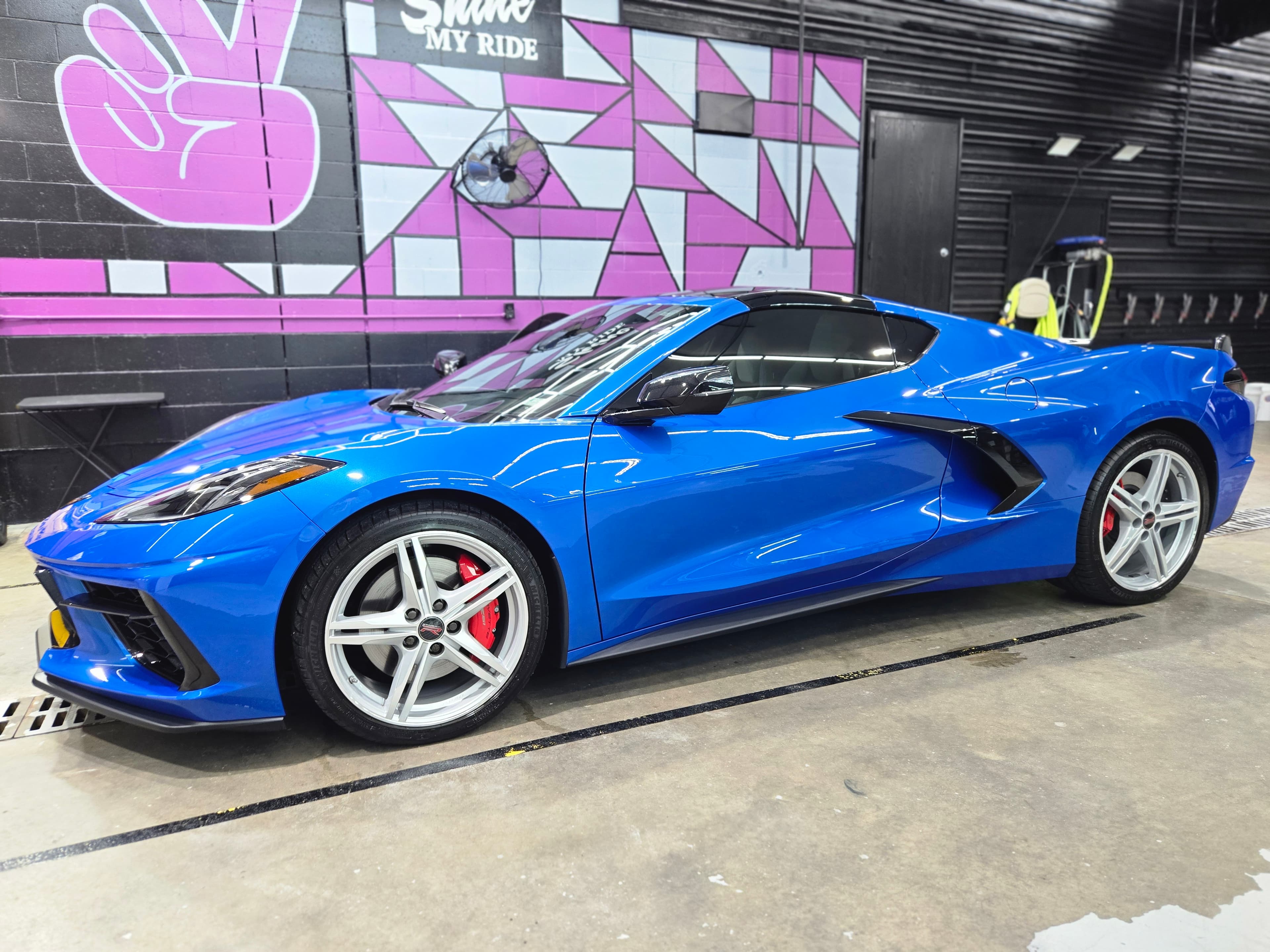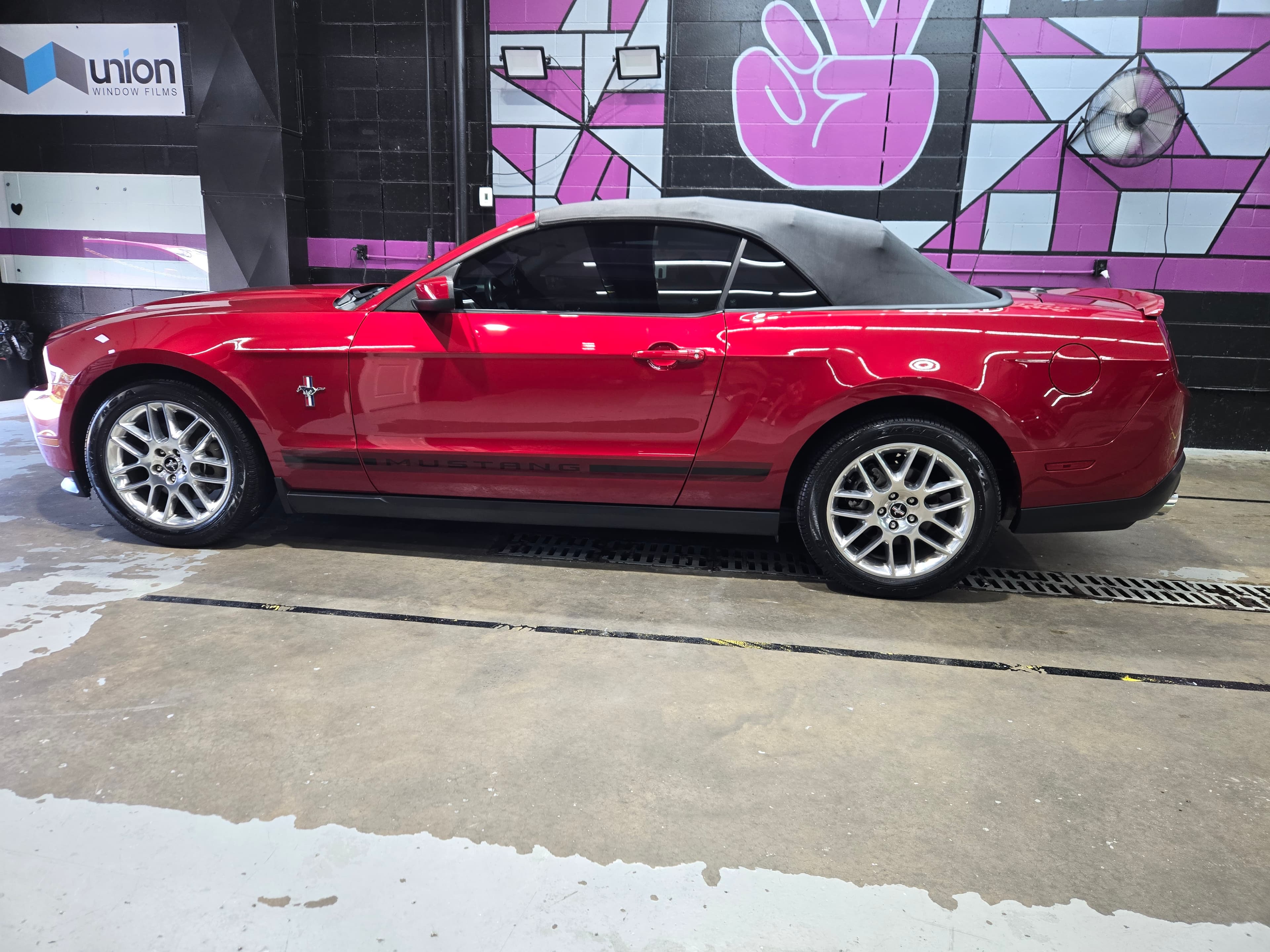
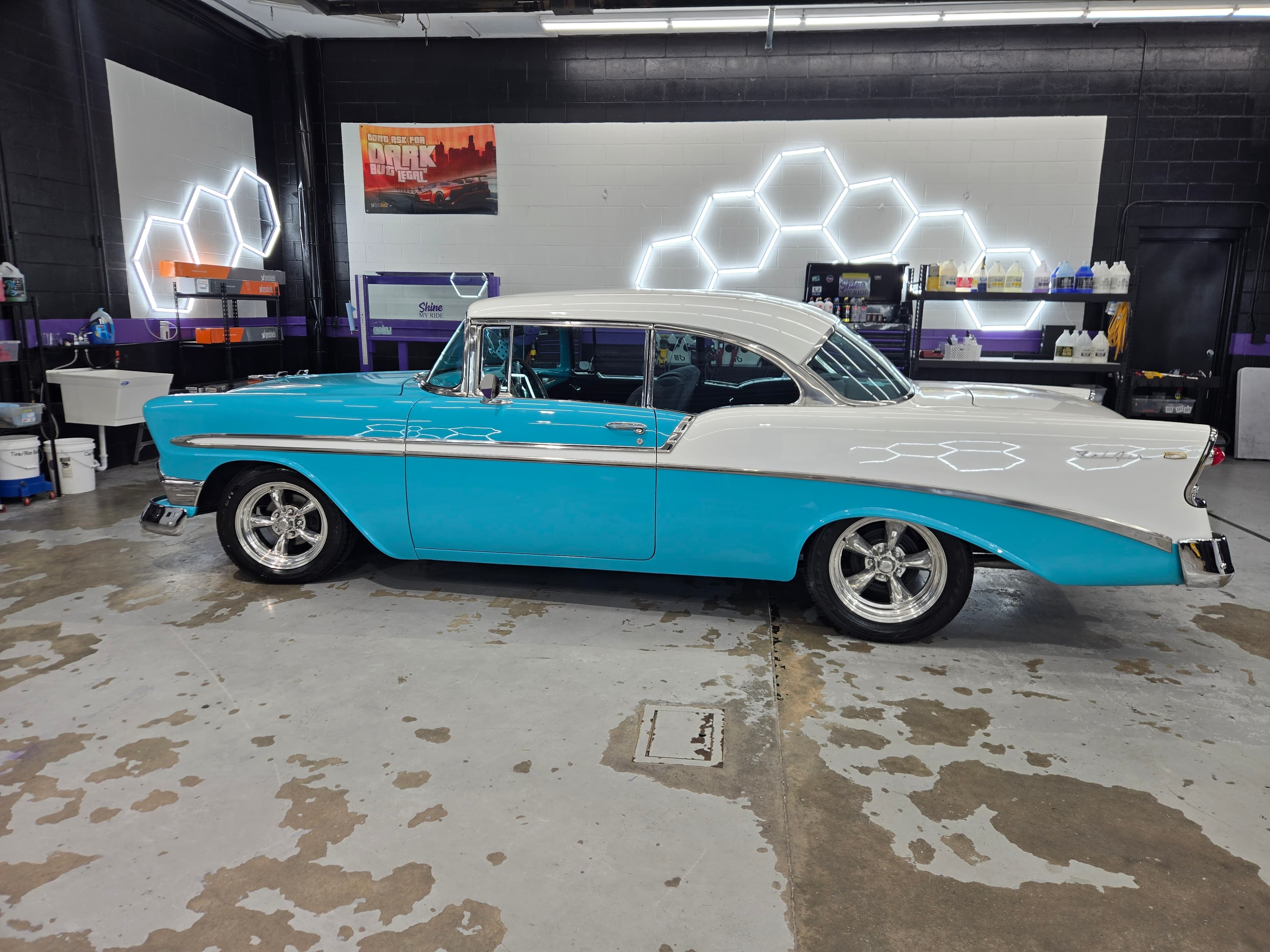
Three of the most-confused terms in the detailing world. Customers come in asking for one and need a different one. Here's the honest breakdown.
Wax — protection only
Wax (carnauba or synthetic) is a sacrificial protection layer applied on top of clean, prepped paint. It adds depth and gloss, beads water, and protects briefly — typically 6 weeks to 4 months. It does not remove anything from the paint. If your paint is swirled or dull, wax over it just makes shiny swirls.
Use a wax when:
- Paint is in good condition with no real defects
- You want short-term enhancement before selling or showing the car
- You want a quick refresh between full details
Polish — removes very light defects
Polishing uses a fine abrasive and a soft pad to remove the top few microns of clear coat — enough to level out very light swirl marks, water spots, and oxidation. Some polishes also add a temporary glaze. Polishing is part of paint correction, but a 'polish' as a standalone service typically means one light pass — not a multi-stage correction.
Use a polish when:
- Paint has very light swirl marks visible only in direct sun
- Paint feels slightly rough to the touch from light fallout
- You want to prep the surface before a wax or sealant
Paint correction — the real deal
Paint correction is a measured, multi-stage process: heavy cut to remove defects, then progressively finer pads and compounds to remove the haze left by the first stage, then a finishing polish to restore depth. Done right, it removes:
- Swirl marks from automatic car washes
- Water etching
- Oxidation and dullness
- Bird-dropping etching (if not too deep)
- Light scratches that don't catch a fingernail
It does NOT remove deep scratches that are below the clear coat — those need touch-up or a respray. We use a paint thickness gauge to measure how much clear coat we have to work with before starting, because every correction removes a small amount of clear coat.
How to tell what you need
- 01Look at your paint in direct sunlight. See spider-web swirls? You need at least light correction.
- 02Run a clean fingernail across a scratch. If it catches, the scratch is too deep for correction alone.
- 03Wipe the paint with a clean microfiber after washing. If the cloth grabs and feels rough, the paint has bonded contaminants — it needs a clay bar (decontamination) before anything else.
- 04If the paint looks dull and faded but is otherwise smooth — that's oxidation, and correction will bring it back dramatically.
What it costs
Paint correction is the one service we always quote in person. Pricing depends on paint condition, defect severity, panel count, and how much correction the clear coat can safely handle. A daily-driven black car will need more work than a garaged white one — and that's reflected in the price.
Bring it in for an in-person paint assessment — no charge.
Quick answers.
How long does paint correction take?
A single-stage correction on a sedan typically takes 6–10 hours. A full multi-stage correction on a heavily swirled vehicle can take 16–25 hours spread across multiple days.
Does paint correction damage my paint?
No, when done correctly. We measure clear coat thickness before starting and work conservatively. Done improperly with the wrong pad or compound, yes — which is why this isn't a service to bargain-hunt.
How long do the results last?
Indefinitely, unless new defects are introduced. That's why we recommend protecting corrected paint with a ceramic coating — to keep the results.